Posts

THE CHAOTIC SCENE OF LAND ADMINISTRATION IN ZAMBIA
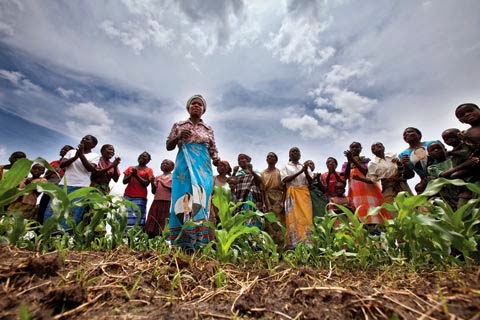
Image
 courtesy of un.org ZAMBIA is in a bizarre position when it comes to land administration and management. No one knows how much land is available for various purposes. For over 20 years the Zambian government has insisted that only 6% of land in Zambia is state land the remaining 94% is customary when in fact a lot of land has since been converted from customary to state land across the country but without any reliable system of records at the Ministry of Lands the true position is unclear. With a dual system of land tenure; customary and leasehold tenure, Zambia’s land is vested in the President on behalf of all Zambians, the issue of vestment itself is one that lacks widespread consensus particularly among the traditional leadership. Some experts have argued that the dual land system of tenure is a drawback to sustained development and others have suggested that Zambia needs to consider adopting freehold tenure as this would guarantee owners of land the necessarily security ...

THE FUTURE OF COMMUNITY MEDIA IN ZAMBIA

1 st April, 2014 The Director Press and Media Development The Ministry of Information and Broadcasting Services Government Complex Lusaka, Zambia. Dear Sir, RE: SUBMISSION TO THE ZAMBIA NATIONAL INFORMATION AND MEDIA POLICY Here below is my submission to the development of the national information and media policy currently underway with your ministry: 1.        CONTEXT The national information and media policy is fundamental tool for the operationalisation of freedom of expression and access to information which is a crucial tenet of democracy and a key recipe for national development. Freedom of expression is guaranteed by the Constitution of the Republic of Zambia which also includes receiving, imparting and communicating information and press freedom. However, Zambia still has “claw back laws” and other pieces of legislation such as the 1931 Penal Code Cap 169 of the laws of Zambia, the Official Secrets Act and the ...

LESSONS FROM MANGANGO

MANY Zambians were shocked by the outcome of the Mangango by-election. A friend in the media described the poll results as interesting and wondered why the people of Mangango could elect a person so advanced in age when they had a choice of electing somebody younger. Such results indeed leave many a youth wondering as to when they too will have an opportunity to climb the ladder of political leadership in Zambia. The victory recorded by the Patriotic Front in Mangango is no mean achievement for them as a party seeking to establish national character and demonstrate that it is a party of choice for a vast majority of Zambians especially the poor.   The opposition political parties in Zambia clearly still have a lot to learn about the voting attitude of people in rural areas. They need to take a few steps back and ask themselves critical questions around their strategy and messaging. Campaign messages The Mangango polls were marred with electoral violence with clashes mainly ...

CHISHIMBA KAMBWILI - AN EPITOME OF PRAGMATIC LEADERSHIP?

Image
YOUTH and Sport Minister Chishimba Kambwili is a very frank and action oriented man who clearly desires results from those entrusted with the management of public affairs. He is not new to controversy and never shies away from expressing his mind. Mr Kambwili has in recent times expressed his frustration at many things going wrong particularly in sports and on matters of youth empowerment. When many ministers opt to hide in the veil of collective responsibility and the provisions of the ministerial code of conduct from expressing their personal view, Chishimba does not. He believes in saying things as they are and many in Zambia have expressed concern that he has left a gap in the opposition in as far as pushing government to perform is concerned particularly in the area of championing the interest of workers and the down trodden in society. Kambwili recently threatened members of the seventeen youth groups in Eastern province that have failed to pay back loans amounting to K331, ...

DEFENDING THE RIGHTS OF PERSONS WITH DISABILITIES

MANY parents of children with disabilities in Zambia today hide their children in homes and deny them an opportunity to socialise and access social development amenities. Sadly, this situation obtains even among very educated Zambians. The attitude of many people is still negative towards persons with disabilities in general. The truth is that no one chooses to live with a disability as it can happen to anyone at any time of their life. According to the World Report on Disability (WHO, 2011), every population of a country comprises 15% of persons with disabilities. In a population of around 13 million people, this translates to two million people in Zambia living with disabilities. Currently this disadvantaged group faces serious problems in accessing social services and justice on an equal basis with other persons. Our society must refrain from seeing disability as a condition on someone but must begin to see disability as a result of our inability to create an environment wher...

Regulating the Zambian church

The government has announced its intentions to enact stronger legislation to regulate the operation of churches in Zambia. According to Ministry of Home Affairs deputy minister Stephen Kampyongo, this move is a response to demands from the church mother bodies and other religious organisations who have expressed concern on the mushrooming of churches and the growing number of clergymen and women who remain unaccounted for in Zambia. I ask the question, since when did churches become a problem? When did they transform from being institutions of hope, morality, integrity and uprightness to institutions of anarchy requiring supervision and control?   Perhaps the government is moving with undue zeal on a matter that they should be leaving to already existing structures such as the registrar of societies and the church mother bodies. The truth is that, as any society grows and develops, it becomes more dynamic and all its institutions evolve and encounter problems. The perceived pr...

WHO WILL DEFEND PRESS FREEDOM IN ZAMBIA?

THE work of journalists is becoming increasingly difficult in Zambia due to growing intolerance by the state to independent media and a rise in cases of harassment of journalists. A recent report by Freedom House, a US based human rights organisation showed that in 2013, Zambia fell 21 places from 72 to 93 out of 180 and landed in the category of states that are classified as “not free”. The Southern African Editors Forum (SAEF) recently joined many other organisations in raising alarm at the deteriorating state of press freedoms in Zambia. In their statement to the media the organisation expressed shock at recent developments that were clearly a violation of the rights of journalists to practice freely and also bent on gagging freedom of expression and speech. Most journalists working for independent media and community journalists are now working in fear and wonder who will stand up for them. It is clear that the Media Institute of Southern Africa MISA Zambia is no longer...