Posts

PRESSURE MOUNTS ON ZAMBIA TO RE-DRAFT MENTAL HEALTH BILL

The international community has stood in solidarity with human rights activists in Zambia who are opposed to the enactment of a new mental health legislation for failure to comply with human rights standards. The Zambian government seems to have left out crucial submissions made by stakeholders during the consultation process and produced a draft which has not been well received even by representatives of persons with mental illnesses and disabilities. In a solidarity statement signed by ten international organisations and experts including Amnesty International, Southern Africa Federation of the Disabled (SAFOD), Disability Rights International, International Commission of Jurists (ICJ), The Southern Africa Litigation Centre (SALC) and Validity Foundation – Mental Disability Advocacy Centre, serious concerns have arisen on the text of the Bill. In recent years, the Special Rapporteur on the Rights of Persons with Disabilities has criticized Zambia’s outdated laws applicab...
ZAMBIAN AUTHORITIES CLOSE INDEPENDENT MEDIA ON INSTIGATION OF THE RULING PARTY

Image
Zambian authorities have continued to use state institutions to muzzle the independent press. The crackdown seems to always heighten around election periods. The latest victim is Prime Television which has received a one month suspension of broadcast license together with private radio station Valley FM and revoked two licences of Ngoma and Kafue radio stations for breaches associated with content relating to the coverage of recent by-election in which the ruling party lost. Announcing the suspension IBA Board Secretary Josephine Mapoma says Prime Television has been suspended for exhibiting unprofessional elements in its broadcasting through unbalanced coverage, opinionated news, material likely to incite violence and use of derogatory language.  She adds that during the suspension the station is expected to conduct in house training on basic journalism ethics and news script writing.  A few days before the suspension, media freedom watchdog The African Freedom of E...

IS ZAMBIA VIOLATING THE RIGHTS OF INTERNALLY DISPLACED PERSONS?

Image
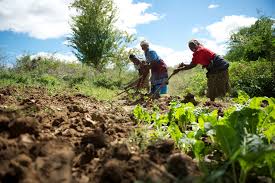
ZAMBIA’s Disaster Management and Mitigation Unit (DMMU) records indicate that there are as much as, 11, 000 people have been internally displaced within the borders of Zambia over the past 10 years. A consortium of civil society organisations working to promote the land rights of Zambians under the auspices of the Zambia Land Allianc e however believes that the figures are much higher. Most displacements of indigenous Zambians are induced either by development projects such as the Multi Economic Facility Zones (MFEZ), mining, industrial, agriculture and other large scale land based investments with minimal, or no compensation at all. In a number of cases, individuals who illegally sell land to rich people, including foreigners,    in the process displace citizens. Zambian authorities accuse some of the people who have been displaced of being squatters without taking into account the narrative that brought the affected people there in the first place.   Take for ...

Strategies to Counter Shrinking Civic Spaces: The Case of the Disability Movement

Image
By Bruce Chooma There is a growing culture of intolerance and impunity by some African leaders. This makes it increasingly difficult for civil society movements to play an effective role in keeping governments in check, particularly on their observance of human rights and the rule of law. Persons with disabilities are a historically marginalised group who experience some of the highest levels of poverty and illiteracy on the continent of Africa. They are often not included in public programmes aimed at delivering social and economic services and benefits on an equal basis with others. Many persons with disabilities, especially women and girls, fall prey to all forms of violence and abuse including gender-based violence and heinous crimes. Often times, derogatory terms are used in reference to persons with disabilities and parents, especially mothers, are often subjected to ridicule and shame because of having children with disabilities. Most counties have for decade...

Zambia’s treatment of foreign opposition leaders raises eyebrows

Image
Last week Zambia deported a leading Zimbabwean opposition figure Mr Tendai Biti after he attempted to enter the country to seek political asylum. The opposition figure was handed back to Zimbabwean authorities despite having successfully obtained a court order restraining Zambian authorities from doing so. The decision to hand over a man who claimed that his life was in danger in his home country because of his political activities has received local and international criticism. This is expected because it was a blatant disregard for international law by Zambian authorities, one that is actually simply embarrassing. However his deportation would not shock those who have followed politics in Zambia in recent times, considering the strong stance he took as leader of a coalition of regional opposition political parties in condemning a growing culture of political intolerance in Zambia particularly during the incarceration of UPND leader Hakainde Hichilima. In this video Biti de...

Have we lost the people?

Image
The case of civil society and land policy advocacy in Zambia… By Bruce Chooma SINCE the attainment of independence in 1964, Zambia has failed to put in place a comprehensive land policy. All land reforms after 1964 were triggered by specific needs at each particular time. A lot of concern is rising from various quarters inside and outside Zambia on the dwindling voice of civil society in Zambia’s governance space. Such a strong voice is necessary to hold government in check and accountable to its people as it is a conduit for the amplification of citizen voices. This article seeks to reflect on the strategies employed by civil society over the years in championing the rights of Zambians to access and control land. This is premised on the fact that, the land question is essentially what the fight for independence was about. That the land is the heritage of the Zambian and generations of Zambians to come must be assured that concrete steps were taken to preserve their land fo...

RE-LIVING THE CHIBONDO GENEOCIDE

Image
By Bruce Chooma On my recent visit to Zimbabwe, I took time to attend an exhibition of the Chibondo Genocide at the National Heroes Acre in Harare where liberation heroes are buried. The exhibition was put together by the National Museums and Monuments of Zimbabwe. It’s a story of how in April 2011 Zimbabweans awoke to a rude shock when hundreds of bodies were discovered stashed in a disused mine. According to Rumbidzai Bvira, a historian and curator of the National Heroes Acre, the Chibondo (formerly Monkey William mine) exhumations were carried out in the context of giving former freedom fighters lying in shallow graves and disused mines, decent reburials. The exhumations brought sadness across the country as bodies kept coming out mostly of freedom fighters. It is believed the extra-judicial killings were carried out between 1972- 1979. However the episode having come just before a general election then was a subj...